
Palantir’s “FDE” Boom Palantir’s “FDE” Boom
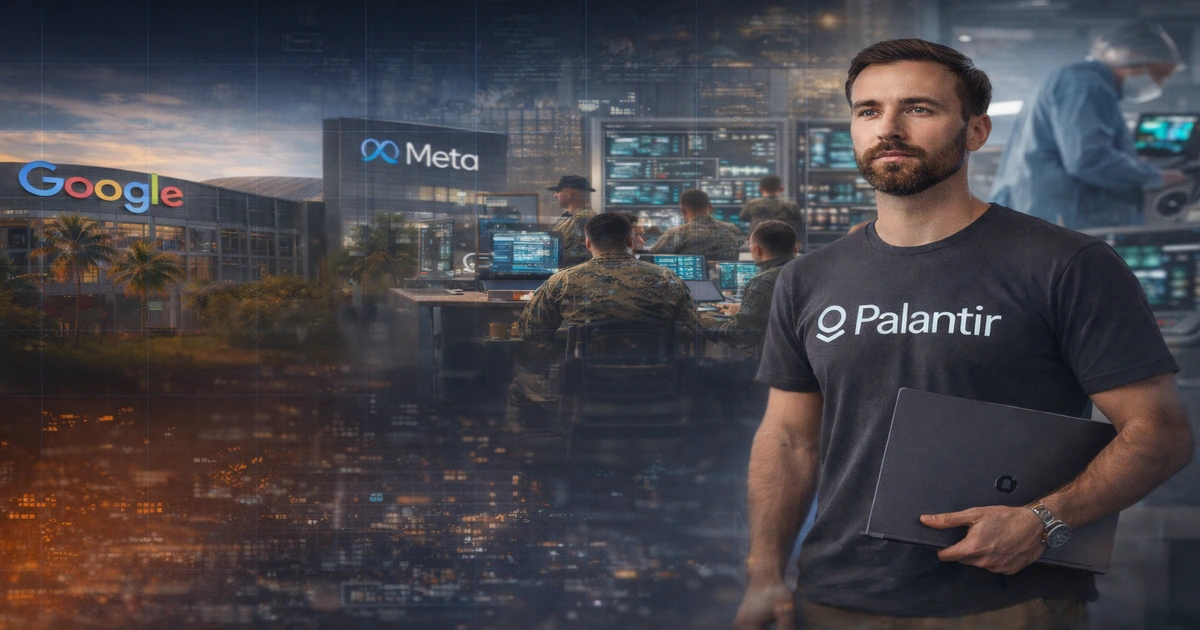
Silicon Valley’s enterprise software world is entering a new phase: selling AI is no longer just about demos and subscriptions—it’s about shipping real outcomes inside the customer’s environment. That’s why Palantir’s long-running model of Field Deployment Engineers (FDEs) is suddenly becoming the blueprint for other AI companies.
1) OpenAI and Anthropic are copying the “on-site build” playbook
Enterprise customers want AI, but many aren’t AI-native. They struggle with system integration, data access, fine-tuning, and agent deployment. The response is straightforward: companies are hiring large teams of AI consultants/engineers who can go in, connect the systems, and make AI work in production—not just in a slide deck.
2) What an FDE really is: engineer + architect + communicator + closer
FDEs aren’t typical developers. The role blends:
- fast prototyping and production engineering
- solution architecture across messy legacy systems
- stakeholder communication (IT, security, operations, leadership)
- proving value quickly (demos, pilots, measurable wins)
In short, FDEs function like a high-speed special unit that turns “interest” into “deployment.”
3) Why Palantir built this muscle first
Palantir’s early customers—government, defense, intelligence—often had massive data but limited ability to unify it into an operational decision system. Palantir’s approach emphasized end-to-end integration and “ontology-style” structuring (organizing real-world entities and relationships so AI can reason over them).
The hardest part wasn’t the technology alone—it was breaking through organizational resistance, which is where on-site teams became essential.
4) The moat isn’t just software—it’s deployment capability
The key advantage highlighted is that Palantir is difficult to replace because its edge isn’t only the platform—it’s the repeatable execution model that makes adoption stick. In this view, AI doesn’t automatically “replace Palantir”; rather, Palantir uses AI to accelerate integration and migration work that customers struggle to do themselves.
5) Why this matters for SaaS: seat-based pricing vs. value/execution models
Traditional SaaS businesses often rely on seat (user) pricing, which can face pressure as AI agents reduce “human seats.” Palantir is framed differently—closer to compute/value/enterprise outcomes, meaning broader automation doesn’t necessarily crush the revenue model the same way.
6) “Everything becomes Palantir”? Maybe—but it’s expensive
The trend is spreading, but it’s not easy to copy. On-site deployment requires:
- elite talent density
- strong internal operating playbooks
- months-long field engagement capacity
- high costs that many startups can’t sustain
So FDE expansion is likely to grow—but only a subset of companies will execute it well.