Is the Subscription(SaaS) Era Ending? Is the Subscription(SaaS) Era Ending?
📉 Is the Subscription Era Ending? How AI Fear Wiped Out $130 Billion from Europe’s Top Tech Giant
For more than two decades, SaaS (Software as a Service) companies dominated the enterprise software market. The subscription model was seen as unstoppable. Businesses relied on cloud-based tools for HR, CRM, ERP, marketing automation, and database management.
But now, a dramatic shift is underway.
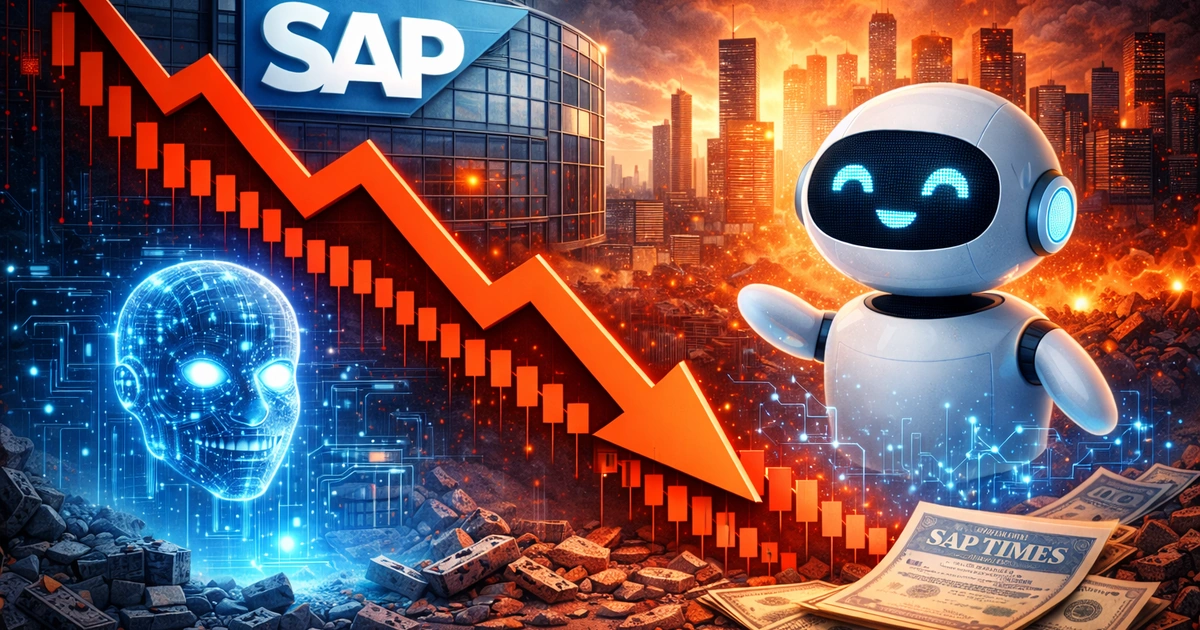
SAP, once Europe’s most valuable company, has seen nearly $130 billion in market capitalization erased in just 11 months, with its stock falling around 25%. Meanwhile, other major SaaS firms such as Salesforce, Workday, and ServiceNow have declined 30% or more—despite broader tech indices remaining strong.
So what changed?
The answer may be simple—and disruptive:
AI is beginning to eat software.
🔍 The Rise of SaaS—and the Sudden Shock
In the 2000s, SaaS companies surged alongside the expansion of cloud computing. Venture capitalist Marc Andreessen famously said, “Software is eating the world.”
Companies adopted SaaS tools because they:
- Increased productivity
- Reduced labor costs
- Scaled efficiently through subscriptions
This was a win-win model: enterprises improved operations, and SaaS vendors enjoyed recurring revenue.
However, AI is now reshaping that equation.
1️⃣ AI Enables “SaaS Independence”
One striking example is Swedish fintech company Klarna.
- Canceled nearly 1,200 SaaS subscriptions
- Rebuilt internal systems using AI coding tools
- Declared “SaaS independence”
Klarna’s CEO stated that AI allowed the company to build a lighter, more efficient tech stack internally.
While some critics argue Klarna is uniquely tech-savvy, broader signals suggest this may not be an isolated case.
2️⃣ AI Agents Are Accelerating Software Development
AI model company Anthropic recently introduced an AI agent tool reportedly built in just 1.5 weeks—a process that traditionally would take months or years.
This shift dramatically reduces the technological moat that legacy SaaS companies once relied on.
AI coding tools now allow:
- Smaller teams to build complex systems
- Faster iteration cycles
- Even non-developers to participate in software creation
As AI lowers development barriers, companies increasingly question whether expensive SaaS subscriptions are necessary.
3️⃣ The “De-SaaS” Movement
Major corporations are also reducing dependency on traditional vendors.
For example:
- Kakao completed a full migration away from Oracle after six years.
- Oracle’s high maintenance fees (around 22% annually) drove companies toward open-source alternatives.
AI further empowers enterprises to:
- Build custom internal solutions
- Replace fragmented SaaS stacks
- Reduce subscription sprawl
Many companies today manage hundreds—or even thousands—of SaaS subscriptions. This fragmentation increases cost and operational complexity.
4️⃣ AI-Native and Compound Startups
Another threat comes from AI-native startups offering “compound” solutions—integrating multiple SaaS functions into one platform.
Instead of:
- Separate CRM
- Separate marketing automation
- Separate loyalty management
These startups offer unified, AI-powered workflows.
This consolidation model challenges horizontal SaaS platforms directly.
📊 VC Perspective: “AI Is Eating Software”
Ethan Choi, partner at Khosla Ventures, summarized the transformation clearly:
“Software used to eat the world. Now AI is eating software.”
His key insights:
- Horizontal applications (non-core systems) are most vulnerable
- “Systems of record” with critical data are more defensible
- AI disrupts workflow software first
- SaaS incumbents face the Innovator’s Dilemma
Many established SaaS companies struggle to disrupt their own revenue streams. While they claim to offer AI-powered products, adoption remains limited.
⚠ Is SaaS Dead?
Not necessarily.
According to venture investors, survival depends on two factors:
- Deep technical differentiation (e.g., advanced databases like ClickHouse)
- Strong vertical integration within specific industries
Generic workflow tools are more exposed.
Highly specialized infrastructure or deeply embedded enterprise systems may endure.
📌 Final Takeaway
The SaaS model is not disappearing—but it is evolving.
AI is:
- Reducing development costs
- Enabling in-house software creation
- Compressing traditional software margins
- Forcing incumbents to reinvent themselves
Investors must now evaluate not just recurring revenue—but AI adaptability.
The subscription era is not over.
But it is being rewritten.